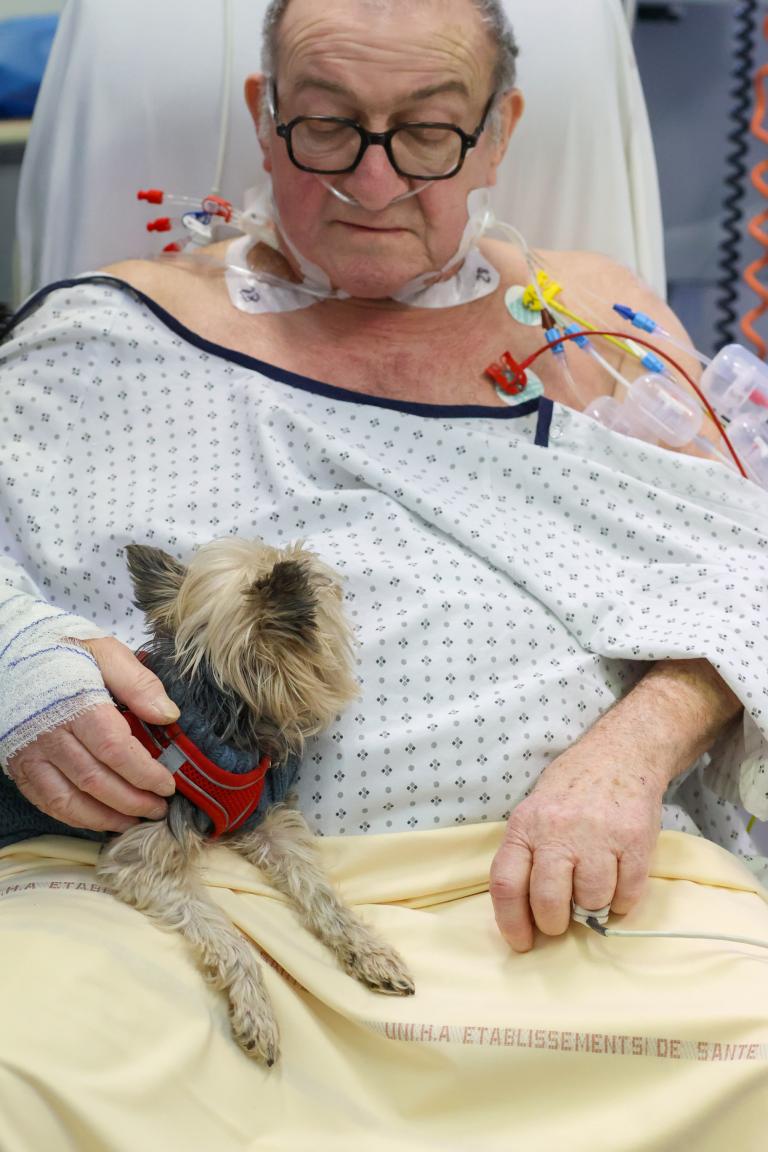





And what if the presence of a dog could help an intensive‑care patient get through one of the most challenging periods of their care journey?
That is the question the Clermont‑Ferrand University Hospital has decided to explore with scientific rigor through PET ICU – Pets Enhancing Therapeutics in Intensive Care Units – a feasibility clinical study, among the very first of its kind in France.
A genuine clinical study, rigorous and strictly supervised.
While some hospital facilities have occasionally attempted to allow animal visits, PET ICU stands apart in a fundamental way: it is a structured research protocol, implemented under real‑life conditions within three critical care units of the University Hospital (on the Estaing site with the adult intensive care unit, and on the Gabriel‑Montpied site with the medical‑surgical ICU and the neurological ICU).
The study is led by the Clermont‑Ferrand University Hospital and coordinated by Prof. Matthieu Jabaudon, with support from the Directorate of Clinical Research and Innovation. Developing this research protocol was the thesis work of a resident in the anesthesia and intensive care specialty program in Clermont‑Ferrand. Funding was also obtained through the hospital’s internal clinical research call for proposals. The objective is clear: to demonstrate scientifically that visits from patients’ companion dogs are feasible, safe, and potentially beneficial.
A multidisciplinary expertise mobilized.
To ensure everyone’s safety, animal welfare, and strict compliance with hospital hygiene standards, PET ICU relies on a dedicated team of experts.
The study brings together:
- a veterinarian from VetAgro Sup (Lyon), responsible for supervising the dogs’ health;
- a professional dog trainer, in charge of staff training and behavioral assessment of the animals;
- the hospital hygiene teams and the CHU’s Infection Control Committee (CLIN);
- volunteer caregivers from the three ICUs involved in the protocol.
This collective and cross‑disciplinary approach is one of the project’s major strengths: nothing is left to chance, and each visit is the outcome of true teamwork.
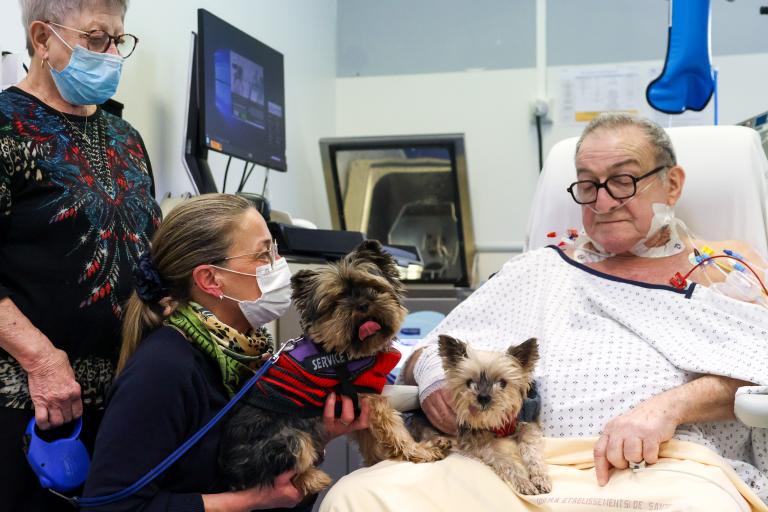
A strict hygiene and safety protocol
For a dog to be allowed into an intensive care unit, several conditions must be assessed beforehand. The animal must be fully up to date with its vaccinations (rabies, leptospirosis, distemper, infectious canine hepatitis, parvovirus, influenza), must have been dewormed at least 48 hours before the visit, and must show no signs of any transmissible disease.
It must also display a sociable, calm, and non‑aggressive temperament, be accustomed to leaving the home environment, and undergo a behavioral check upon arrival.
Access is granted only through external entrances to the hospital in order to limit internal circulation.
Prior to the visit, a cloth infused with the odors of the ward is given to the family to help the animal get used to the hospital environment.
During the visit, all of the patient’s dressings and medical devices are protected.
After the dog leaves, the room undergoes a complete reset: dressings, bedding, and the patient’s gown are changed, followed by reinforced cleaning.
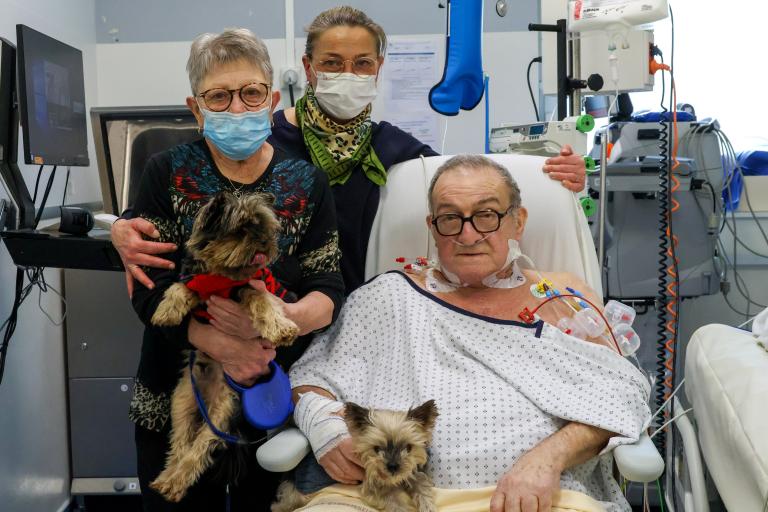
How does the visit take place?
Each visit is brief, controlled, and supervised.
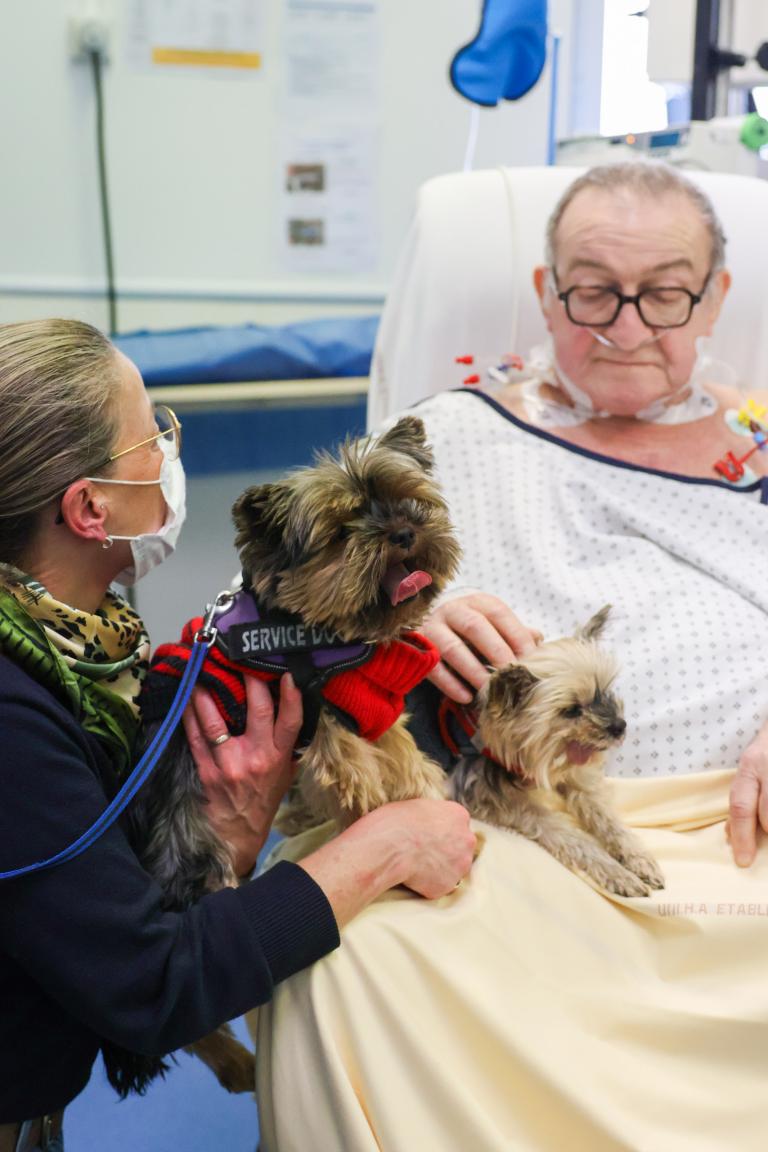
The dog arrives with a relative of the patient and a volunteer caregiver. The duration is limited to a maximum of 15 minutes, within a dedicated time slot so as not to disrupt care.
If the patient’s condition allows, direct contact may be established: petting, a calming presence, simple interaction.
At the end of the visit, satisfaction questionnaires are collected from the caregivers, the accompanying relative, and from the patient whenever possible. These data will help assess the acceptability and emotional impact of the intervention.
Objective of the study?
PET ICU’s primary ambition is to assess the feasibility and safety of these visits in an intensive‑care setting.
The study will be considered feasible if at least 8 out of 21 dogs are able to enter patient rooms under the strict conditions defined by the protocol.
If the results are positive, this first phase could pave the way for further research exploring the potential effects of these visits on:
- the patient’s morale and comfort;
- pain;
- confusion or anxiety;
- and, more broadly, the overall quality of the intensive‑care experience.
A deeply human approach
PET ICU is part of an international movement aimed at humanizing intensive care.
In an environment often perceived as overwhelming, technical, and isolating, the possibility of reconnecting with a familiar animal could become a form of non‑pharmacological emotional support, complementary to standard care.
By providing rigorous scientific data where only intuition and occasional initiatives existed, this study could serve as a national reference and, in the long term, contribute to the development of official recommendations for this type of support in intensive care.